Article: Beginner’s Glossary
Beginner’s Glossary
New to needlepoint?
Here are the terms and materials you’ll want to know before you begin.
Canvas
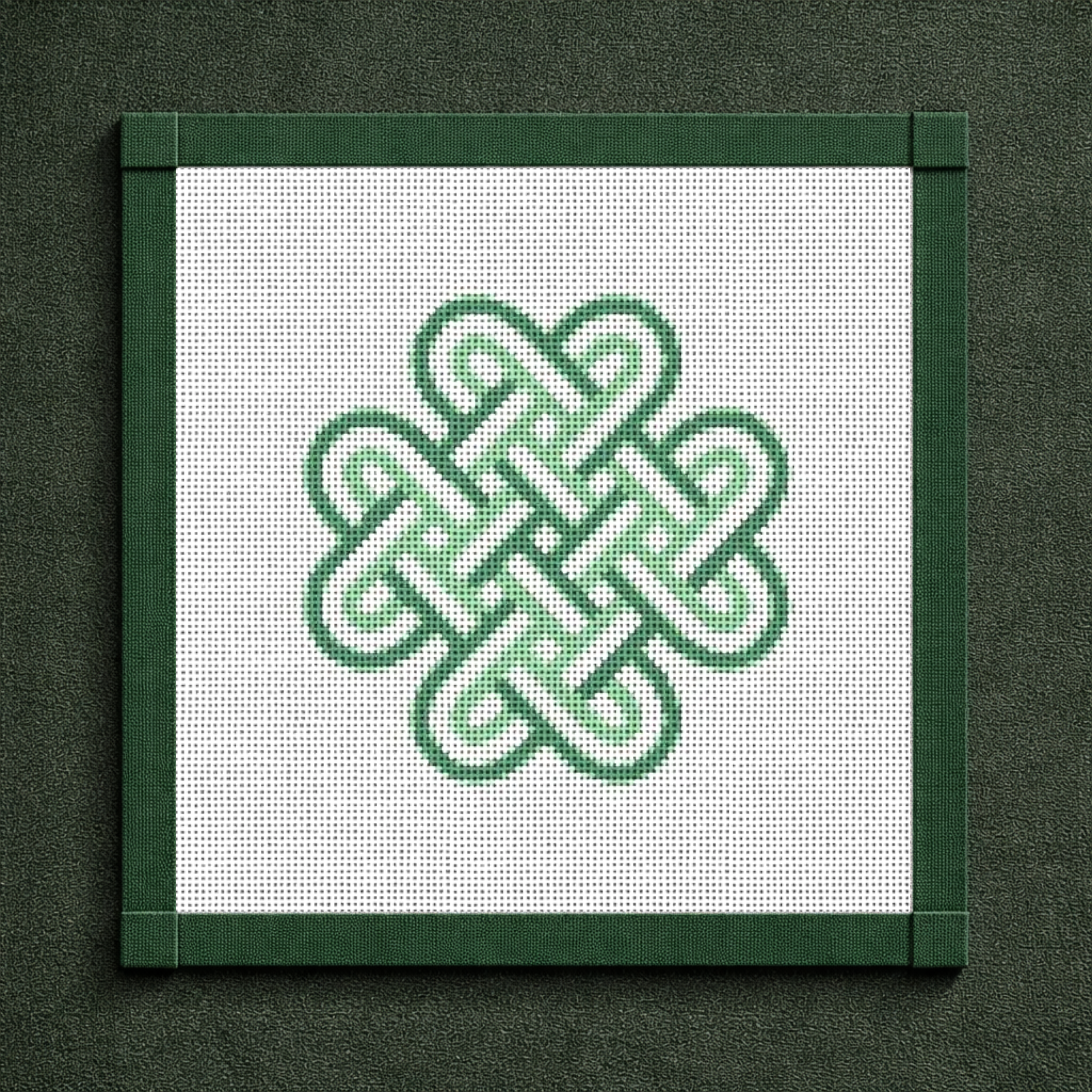
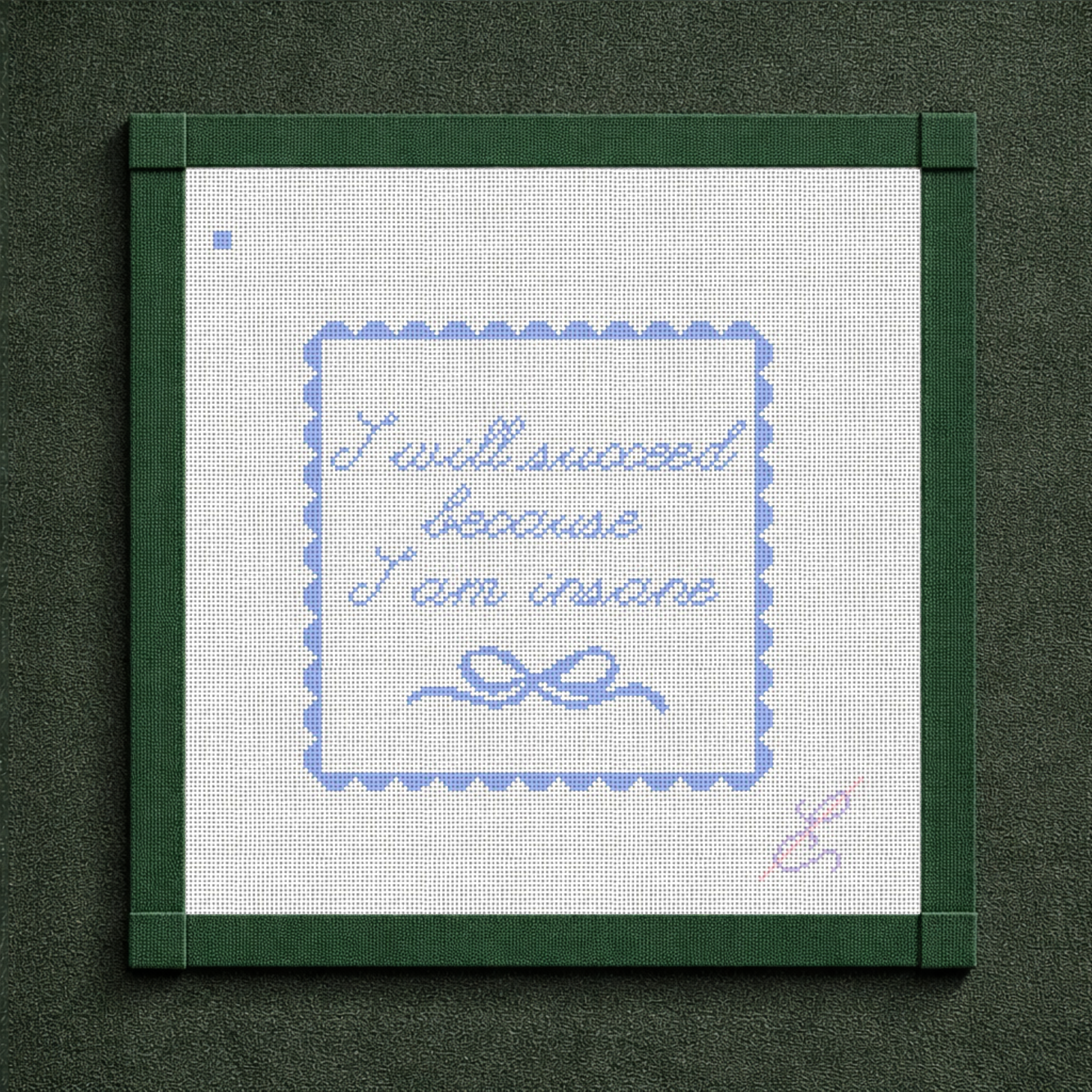
The foundation of every needlepoint project. Canvas is an open-weave fabric, typically made from stiffened cotton or polyester, with a grid of evenly spaced holes that guide your needle and thread. Think of it as your working surface—the design is printed on the canvas, and you cover it by filling in each intersection with thread.
Mesh Count
Mesh count tells you how many threads (or holes) per inch a canvas has. A 14-mesh canvas has 14 holes per inch—larger openings, easier to see, and ideal for beginners. A 16-mesh canvas offers a middle ground with slightly finer detail while remaining approachable. An 18-mesh canvas has 18 holes per inch—smaller openings that capture more intricate detail. The higher the mesh count, the more detailed (and more time-intensive) the finished piece. Our canvases are available in 14-, 16-, and 18-mesh.
Thread
The fiber you use to work your canvas. Different threads create different textures and effects — and part of the pleasure of needlepoint is choosing the right thread for each project. At Pierrepont, we offer three varieties in our kits:
DMC Pearl Cotton is a divisible cotton floss available in over 500 colors — the widest range of any thread we have found. That breadth matters: it allows us to match the finer subtleties of color in each design, so the threads you work with honor the detail already on the canvas.
Pepper Pot Silk is a single strand of pure, hand-dyed silk with a luminous sheen. Silk lends a finished piece a depth and glow that cotton cannot match, and Pepper Pot works as smoothly for a beginner as it does for an expert hand.
Radiance Metallic Thread is a high-sheen thread with a smooth, softly twisted hand, made for adding light to a design. Radiance suits holiday canvases and celebration pieces especially well.
Needle
Needlepoint uses a blunt-tipped tapestry needle—the rounded end slides between canvas threads without piercing them. Needle size corresponds to your canvas mesh: a size 20 needle suits 14-mesh canvas, a size 22 works well with 16- or 18-mesh. The right needle should pass through the canvas holes smoothly without forcing.
Kitting
An unkitted canvas is the printed canvas on its own—you select and source your own threads. A kitted canvas comes with everything you need to complete the project: the canvas, pre-selected threads cut to length, a needle, and sometimes additional materials. Kits are wonderful for beginners or for anyone who loves the convenience of having everything curated and ready to go.
Stretcher Bars
A simple wooden frame that holds your canvas taut while you work. The canvas is attached with tacks or staples, keeping the fabric evenly tensioned so your work stays smooth and consistent. Using stretcher bars isn’t required for every project, but many needleworkers find that the even tension improves both the experience and the finished result.
Finishing
Once your canvas is fully worked, it needs to be turned into something—a framed piece, a pillow, an ornament, a tray insert. This process is called finishing, and it’s typically done by a professional finisher who blocks, trims, and assembles the piece. Many local needlepoint shops offer finishing services. Send us a message if you need a recommendation!