The Glossary
Needlepoint has a vocabulary of its own, and most of it can be learned in an afternoon. These are the words you will meet along the way: first on a canvas listing and inside a kit, later in the choice between one fiber and another, and eventually in the small techniques that separate a piece that is merely covered from one that is beautifully made.
Blocking
Even carefully worked canvas can drift a little out of square by the end of a project. Blocking returns it to true: the completed piece is dampened, pinned square to a board, and left to dry, and it comes off flat and straight. It is the first step of Finishing, and when Pierrepont finishes your piece, we do it for you.
Canvas
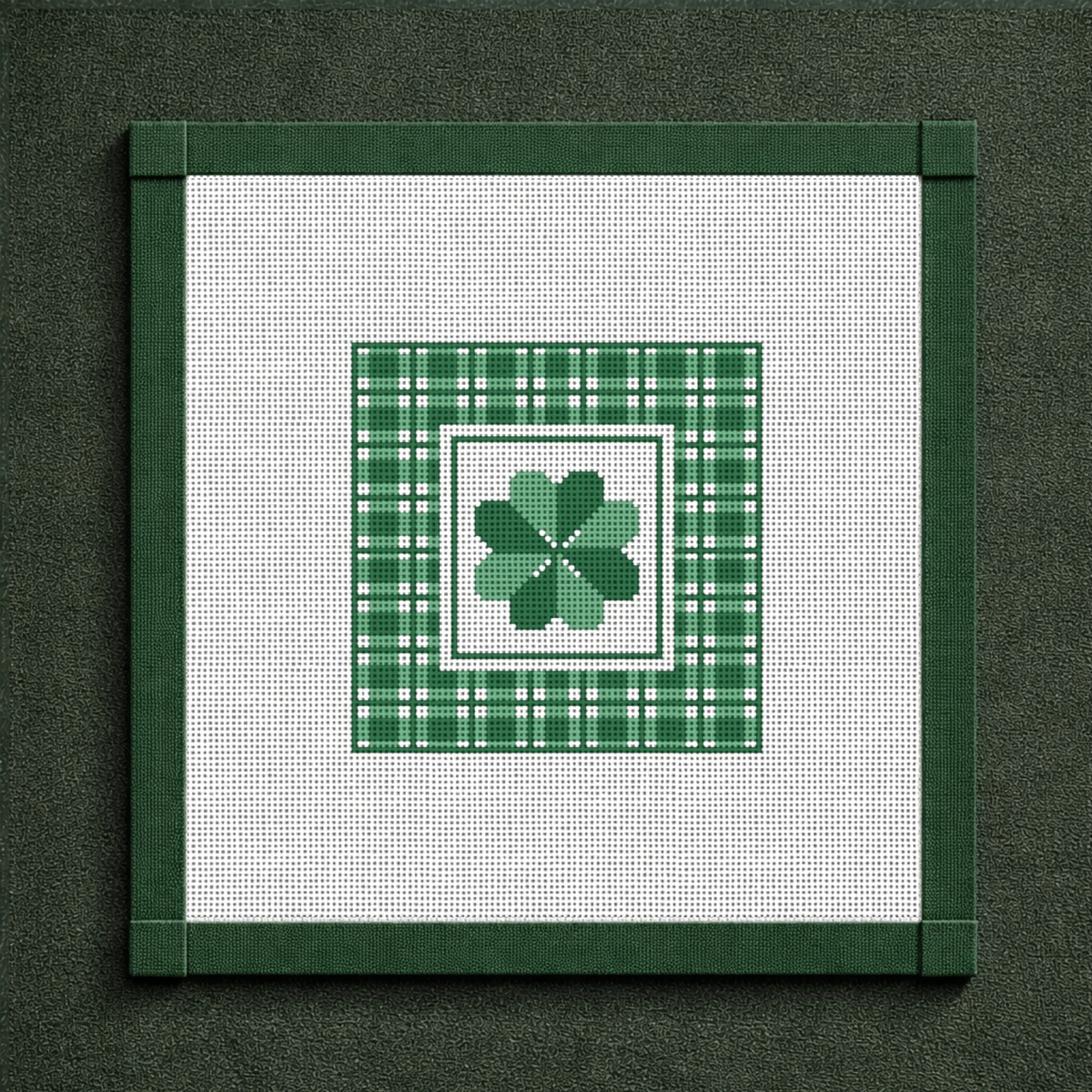
Everything begins with the canvas: an open weave of stiffened cotton, woven into a grid of evenly spaced holes, with the design printed onto it. It is both the picture and the surface you work on, and your needle will pass through every one of those holes until the design is covered in thread.
Canvas Distortion
Canvas worked in one direction, as Continental is, tends to pull out of square over the course of a project. Basketweave prevents most of it, because its diagonal rows alternate direction and the tension balances; stretcher bars prevent more, and blocking corrects what remains.
Compensation
Decorative stitches are built on repeats, and a repeat rarely fits the edge of a design area exactly. Compensation is the practice of working partial stitches to fill those edges cleanly, so that a pattern appears to run under the boundary rather than stop short of it. It takes a little planning, and it is what makes a border look finished rather than interrupted.
Dye Lot
Threads are dyed in batches, and two skeins of the same color from different batches can differ by a shade. The batch is the dye lot. When you gather thread for a large area, buy it all at once, from the same lot, and the color will hold steady across the whole field.
Finishing
Once every intersection is covered, the canvas is finished in the lowercase sense and ready for Finishing in the capital one: the blocking, trimming, and construction that turn it into an ornament, a pillow, a stocking, a framed piece. Pierrepont offers Finishing for its own canvases. Leave at least two inches of bare canvas on every side, and send the piece to us untrimmed and unblocked; we will do the rest and post it home to you.
Frogging
Every needlepointer takes out stitches now and then, and the craft has a gentle word for it: frogging, because you rip it, rip it. Work the thread back out with the eye of the needle rather than the point, and the canvas will not remember.
Interlock Canvas
Interlock looks like mono, but at each intersection the threads are twisted around one another so that they cannot shift. Some needlepointers prefer it for pieces that will be handled often or worked in many different techniques, since the grid stays exactly where it was woven.
Kitted and Unkitted
An unkitted canvas is the printed canvas alone, and you choose and gather your own threads, which becomes a pleasure in itself once you know what you like. A kitted canvas arrives with everything the design needs: the threads in every color, cut and labeled; a printed color key with the strand count for each; a tapestry needle sized to the mesh; a threader; a pair of golden stork scissors; and a mesh bag to keep it all together. If you are new, begin with a kit, and let the guesswork be mine.
Laying Tool
A laying tool is a smooth pointed instrument—a large blunt needle, or the trolley needle that sits on a fingertip—used to guide the strands flat against the canvas as each stitch is drawn down. Threads that lie flat reflect light evenly, which is the whole secret of silk and stranded cotton looking as they should.
Local Needlepoint Shop
A local needlepoint shop, often abbreviated to LNS, is the neighborhood store where canvases are sold, threads are matched, questions are answered, and Finishing is arranged. If you have one near you, it will become a friend; many of the shops that carry Pierrepont canvases are exactly this kind of place.
Mesh Count
Mesh count is the number of holes to the inch. A 14-mesh canvas has fourteen and an 18-mesh canvas eighteen, and the difference is the difference between a broad brush and a fine one: the higher the count, the smaller each stitch, the more detail the canvas can hold, and the longer the piece will take. Pierrepont canvases are printed at 14, 16, and 18 mesh. Eighteen is the one I reach for most, because it holds painterly color and a fine line beautifully; fourteen is the kindest place to begin.
Metallic and Specialty Threads
Metallics, ribbons, and novelty fibers are accents rather than foundations: a line of light in a window, a glint on a star, a texture that catches the eye. Most want short lengths and a gentle touch, since they fray if pulled through the canvas too many times. Radiance, the metallic in Pierrepont kits, glides through 18-mesh without the coiling that gives metallics their reputation.
Mono Canvas
Mono canvas is woven from single threads, one horizontal and one vertical at every intersection, and it is the canvas most needlepoint is worked on. It is flexible, it takes nearly every technique, and it is what Pierrepont canvases are printed on.
Needle
Needlepoint uses a tapestry needle, blunt at the tip so that it slips between the canvas threads rather than piercing them. The needle should match the mesh: a size 20 for 14-mesh canvas, a size 22 for 16 and 18. If you find yourself forcing it through, it is a size too large.
Needle Minder
A needle minder is a small decorative magnet that sits on the canvas and holds your needle whenever you set the work down. It is the sort of object that seems unnecessary until the first evening you own one.
Pearl Cotton
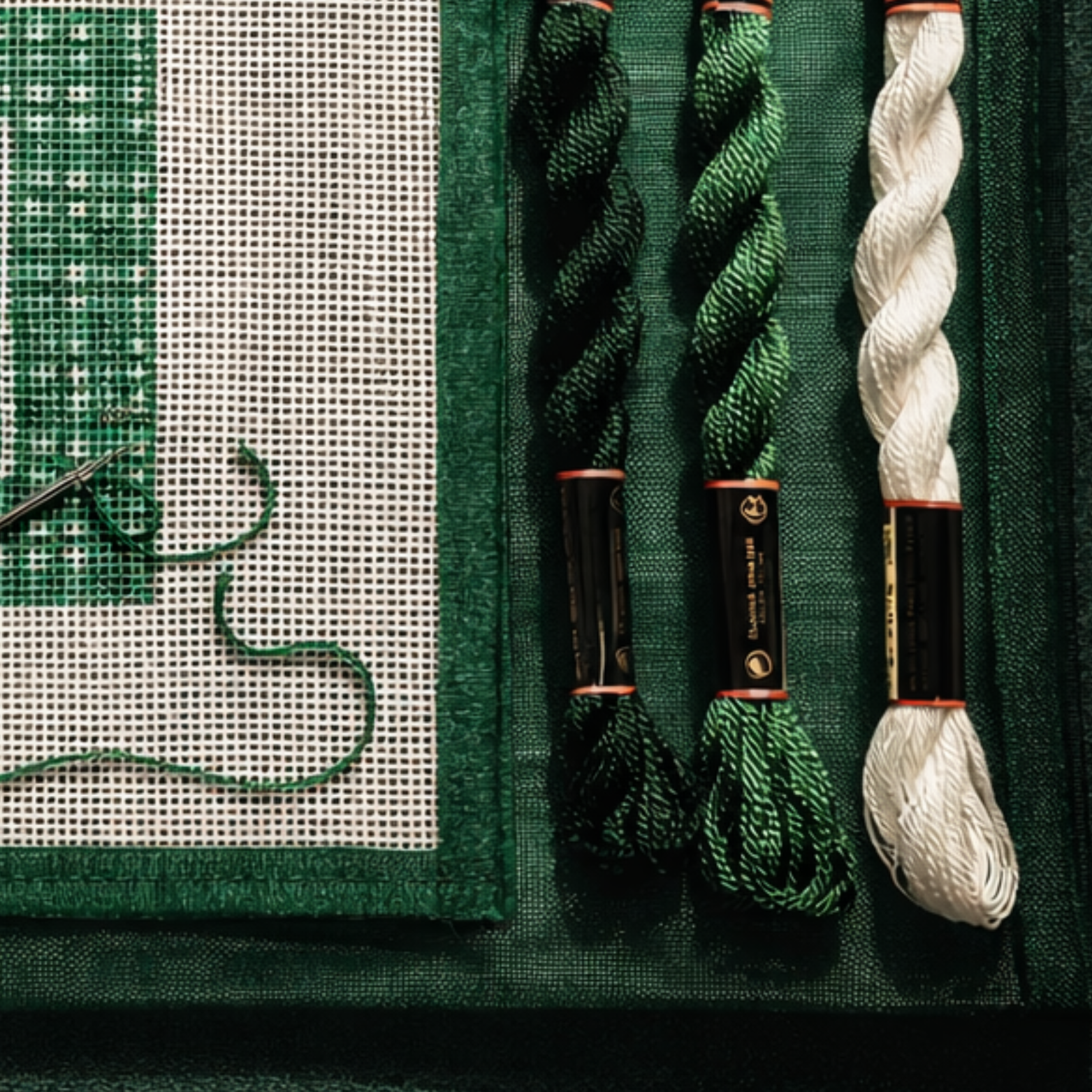
Pearl cotton is a mercerized cotton with a distinctive twist and a gentle sheen, and it comes in several weights: size 3, the heaviest, for coarse canvas; size 5, which suits 14 through 18 mesh and is the thread in a standard Pierrepont kit; and size 8, the finest, for the highest counts. It gives a canvas a soft luminosity without the temperament of silk.
Penelope Canvas
Penelope, or double-thread canvas, is woven with pairs of threads in each direction, which gives it two mesh counts at once. You can work over the pairs for a coarser gauge, or part them and work between for finer detail in a face or a flower, all on the same piece of cloth.
Persian Wool
Persian wool is a three-ply yarn whose strands separate, so that coverage can be adjusted to the mesh. It is forgiving of uneven tension, widely available, and the thread on which the tradition of needlepoint was largely built.
Printed Canvas
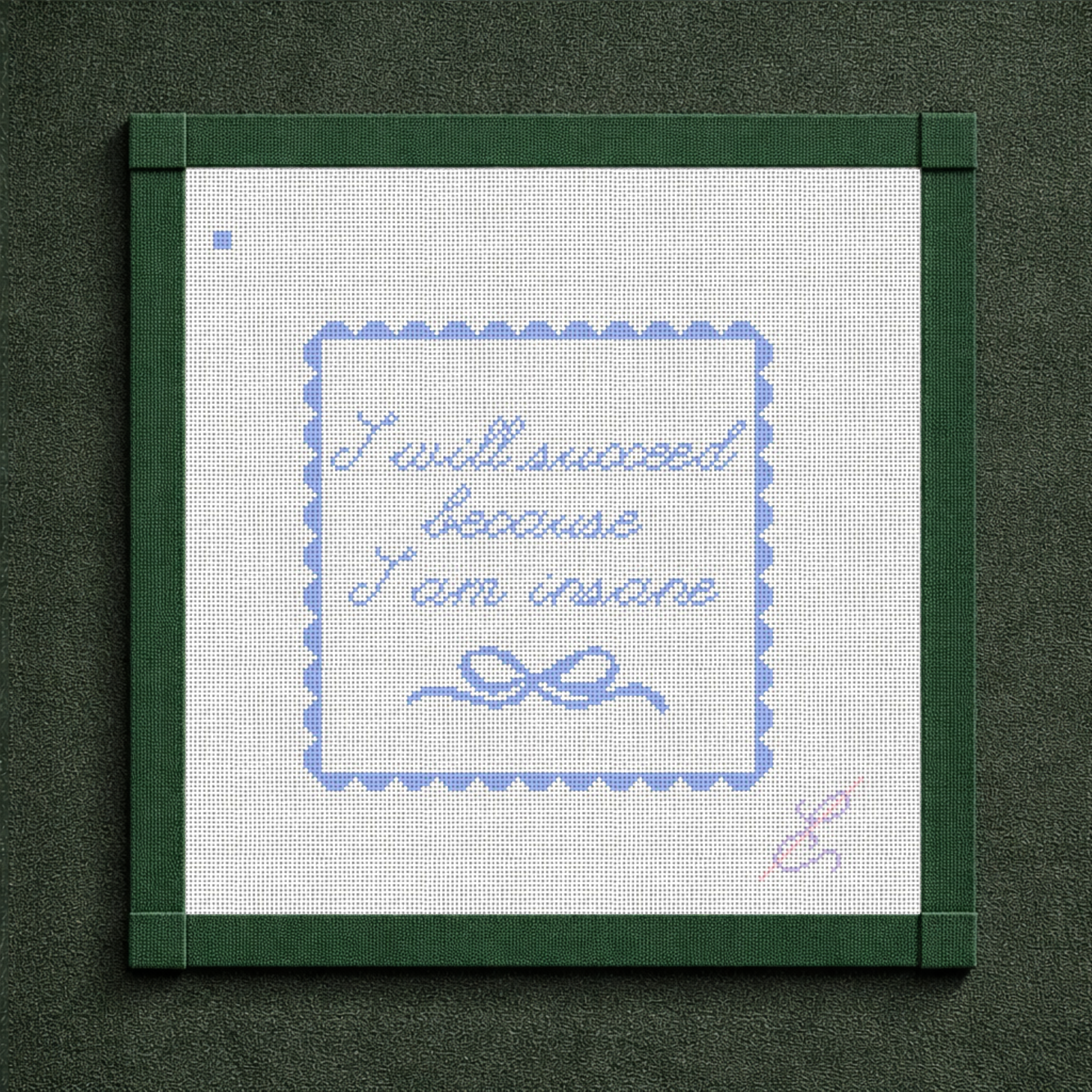
You will hear needlepoint canvases described as hand-painted, stitch-painted, or printed, and the words matter less than what they promise. A hand-painted canvas is colored with a brush, and a stitch-painted one has each intersection painted individually so that every stitch has one clear color. A printed canvas, which is what Pierrepont makes, carries the design onto the mesh with the exactness of the original artwork: every line where it was drawn, every color as it was mixed, every intersection legible. It is how I keep the painterly detail of a design intact from the studio to your hands.
Silk
Silk is luminous and unforgiving. It catches the light as nothing else does, and it shows every inconsistency of tension and tangles if handled carelessly; a laying tool and a short working length are its friends. Pepper Pot, the hand-dyed silk in Pierrepont silk kits, is unusually easy in the hand for a silk, which is why I chose it.
Skein, Strand, and Ply
Thread arrives as a skein, a wound length of a single color; the piece you cut from it and thread through the needle is a strand. Some threads are made of several plies twisted together, and they can be separated and recombined to change how thickly the thread covers the canvas. A Pierrepont color key tells you how many strands each color wants, so that the coverage comes out even.
Stranded Cotton
Stranded cotton, the embroidery floss of childhood, is six loosely twisted strands that can be separated and recombined in any number. It offers the most precise control over coverage and allows colors to be blended strand by strand, and it asks in return for attention to tension and to the lay of the thread.
Stretcher Bars
Stretcher bars are a simple wooden frame that holds the canvas taut while you work, with tacks pinning the bare margins to the wood. They are not strictly required, but they keep the tension even and the canvas square, and most needlepointers who try them do not go back.
Tapestry Wool
Tapestry wool is a single tightly twisted ply that does not separate. It lays down a smooth, uniform surface and is the choice when consistency matters more than adjustability.
Tent Stitch
The small diagonal stitch that covers one intersection of the canvas is called a tent stitch, and it is the foundation of nearly everything in needlepoint. There are two ways of working it that you will meet at once. Continental works in horizontal rows and is the simplest to learn; Basketweave works in diagonal rows, and because its tension alternates, it keeps the canvas square as the work grows. The Stitch Guide walks through both.
Thread
Thread is the fiber you work the canvas with, and choosing it is one of the pleasures of the craft, since the same design can be made to look like cotton, like silk, or like candlelight. Pierrepont kits come in three. DMC Pearl Cotton is the classic, with more than five hundred colors—the widest range I have found, which is what allows the threads to honor the subtleties already printed on the canvas. Pepper Pot Silk is a single strand of pure silk, dyed by hand, with a luster that gives the completed piece the soft gleam of satin. Radiance is a metallic that catches the light the way candlelight does, and it belongs on holiday canvases and pieces made for celebration.
Thread Coverage
Coverage is how completely the thread hides the canvas beneath it. Good coverage shows no mesh between the stitches, and it depends on the thread, the number of strands, your tension, and the mesh count together. Before committing a new thread to a whole area, work a few stitches in a corner and look at them in daylight.
Waste Knot
A waste knot is a way of beginning a thread without a knot on the back. Tie a knot at the end, pass the needle down from the front a short distance ahead of where you will work, and stitch toward it; the new stitches secure the tail on the back, and when you reach the knot, you snip it away. The back stays flat, which your finisher will thank you for.
Work in Progress
A canvas that is underway is a work in progress, and in the needlepoint world it is spoken of with affection—most of us have several. The pace of the craft is part of its pleasure, and a piece that takes a season to complete is a piece that has kept you company.